Parga vs Kalkan
Two very similar destinations — with subtle but important differences
Parga and Kalkan are often compared — and for good reason.
They attract the same type of traveller:
- Those looking for small, independent boutique hotels
- A strong restaurant scene
- A walkable, sociable town
- A destination that feels established rather than overdeveloped
In fact, Parga was introduced into our portfolio because so many of our Kalkan guests were looking for something similar — but somewhere new.
The reality is, if you like one, you are very likely to like the other — they offer many of the same fundamentals, just in a different setting.
Both deliver what many travellers are searching for: a naturally attractive harbour-front destination, low-rise tourism, consistently good restaurants, and a lifestyle that centres around the sea.
They are also both hillside towns, with daily life shaped around the harbour and coastline.
The differences are there — particularly in beaches, atmosphere and style — but they’re subtle, rather than completely changing the experience.
The overall feel
Familiar in concept, different in character
Both Parga and Kalkan are built around harbour-front living, with daily life centred on the water, restaurants and a strong sense of place.
They are also both hilly, which shapes the layout and views in each destination.
Where they differ is in their character and visual identity.
Parga:
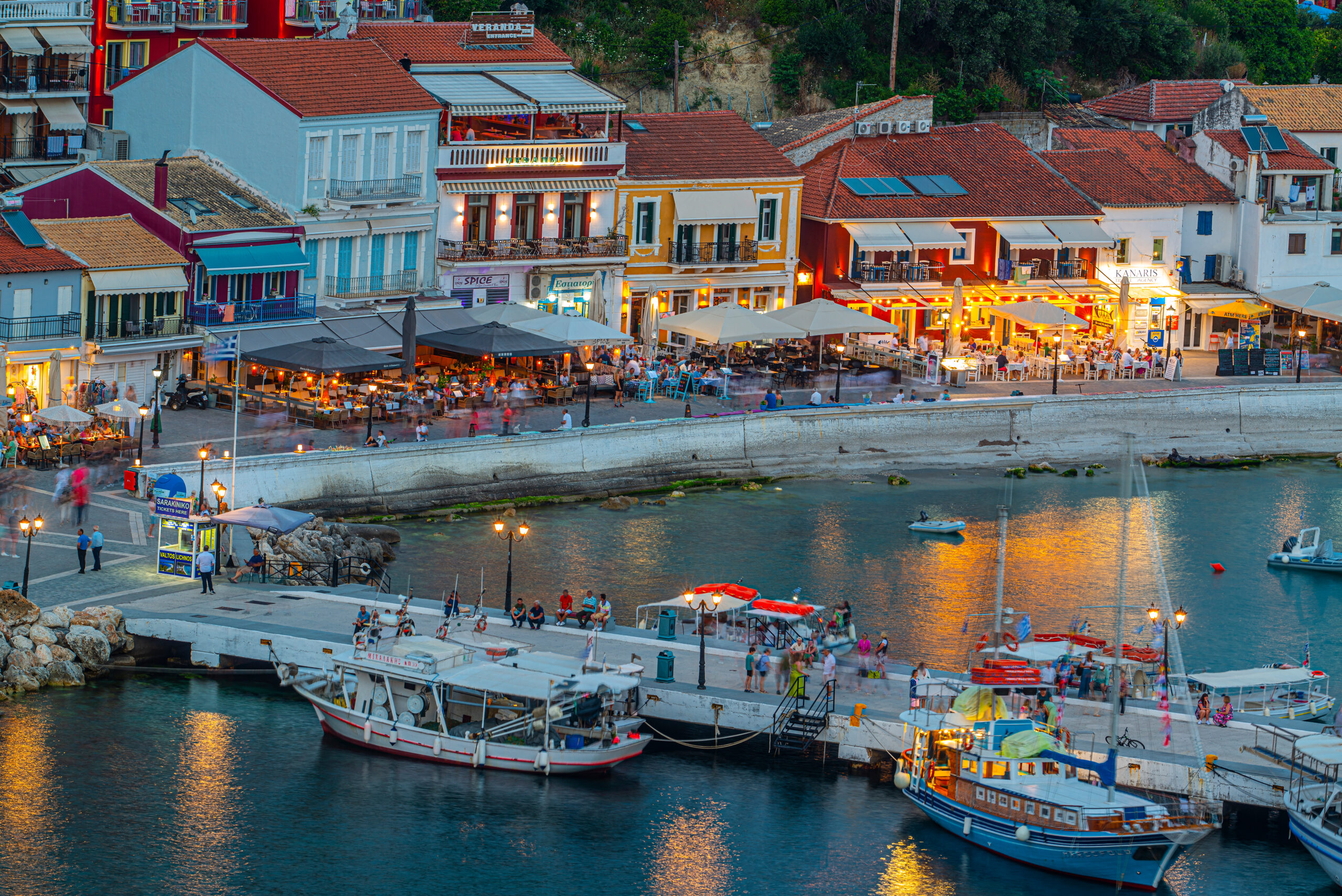
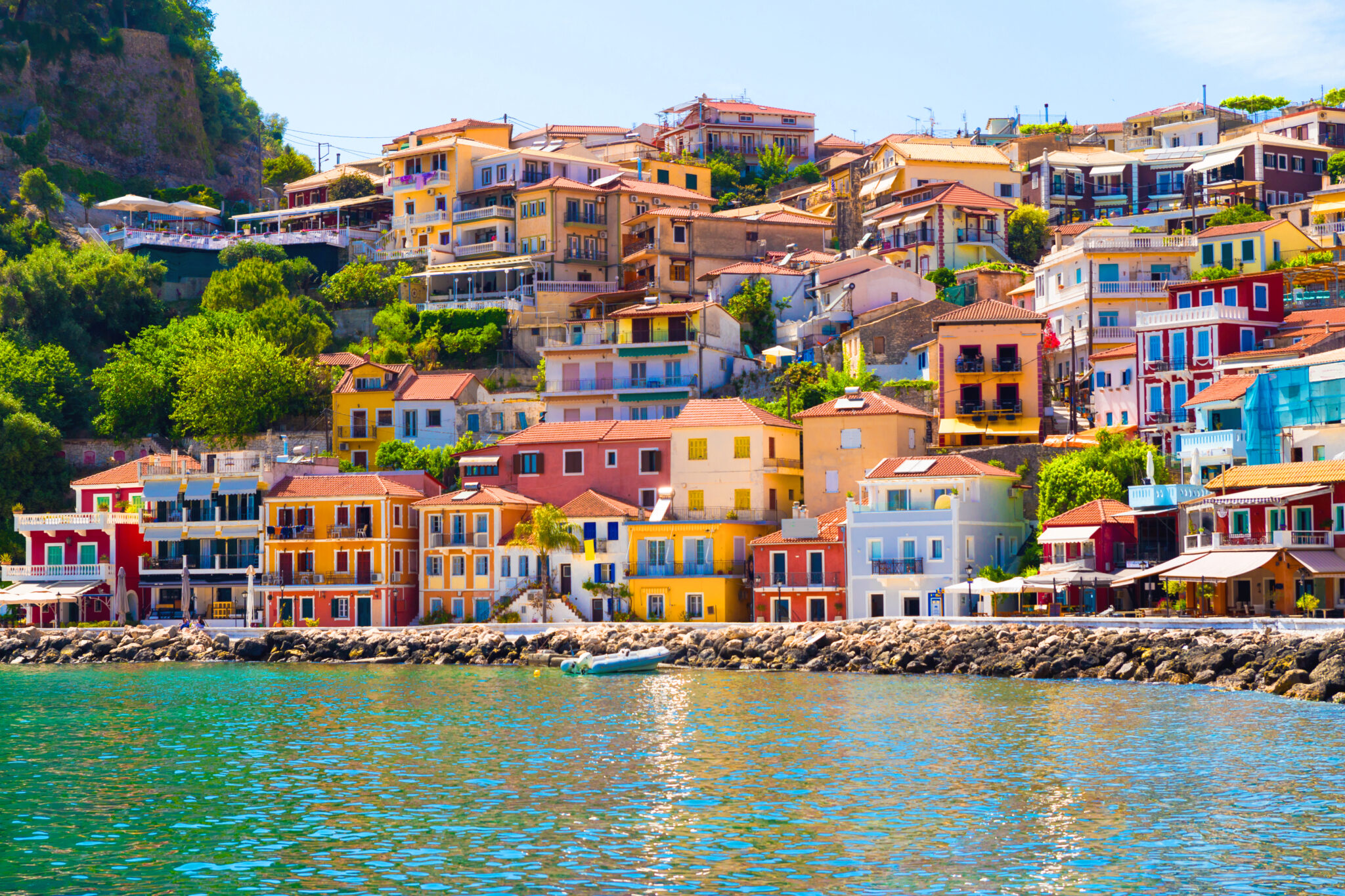
- Venetian architecture with pastel-coloured buildings
- A greener setting, with pine trees running down to the shoreline
- Views across to the islet of Panagia and nearby islands
- A more mixed European clientele, giving it a cosmopolitan feel
Kalkan:
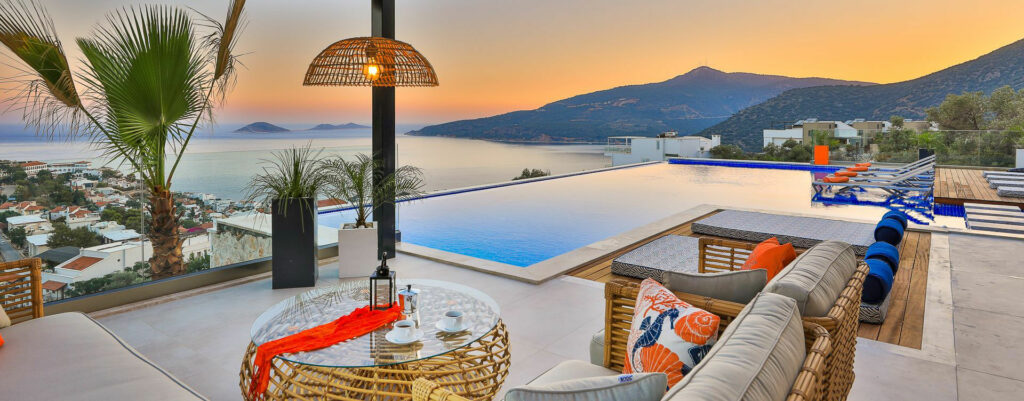
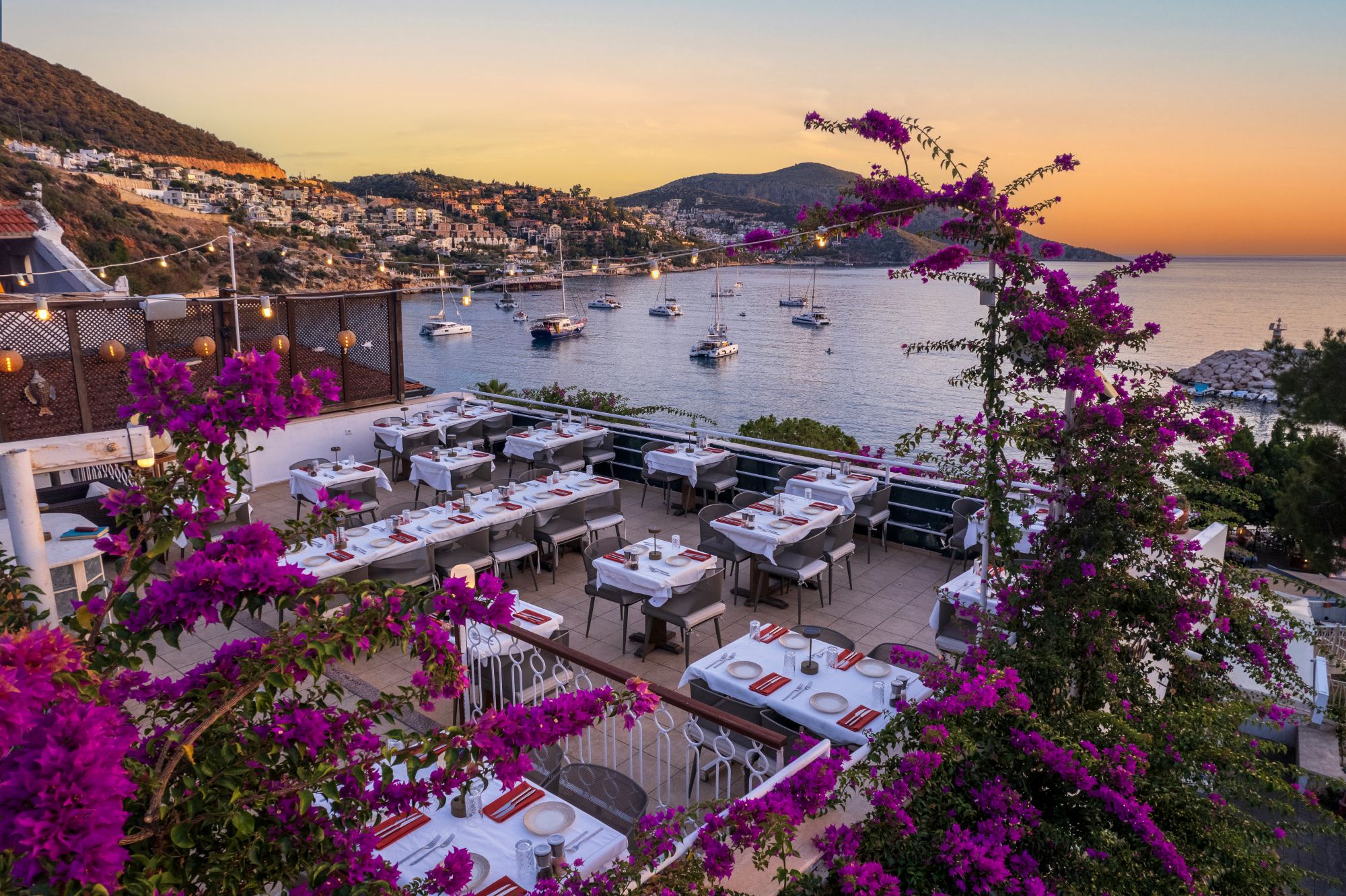
- Ottoman-influenced architecture with whitewashed, cubic styling
- A drier, more rugged landscape
- A long-established British following
- A slightly more defined “scene” in peak season
“We introduced Parga because our Kalkan guests were asking for something similar — a destination with character, strong restaurants and everything within walking distance. It delivers that, but in a different setting. You still have the same fundamentals, just with a different backdrop.”
— Holly Matthews, Head of Product
Beaches
Natural shoreline vs structured beach clubs
This is one of the clearest differences between the two.
Parga:
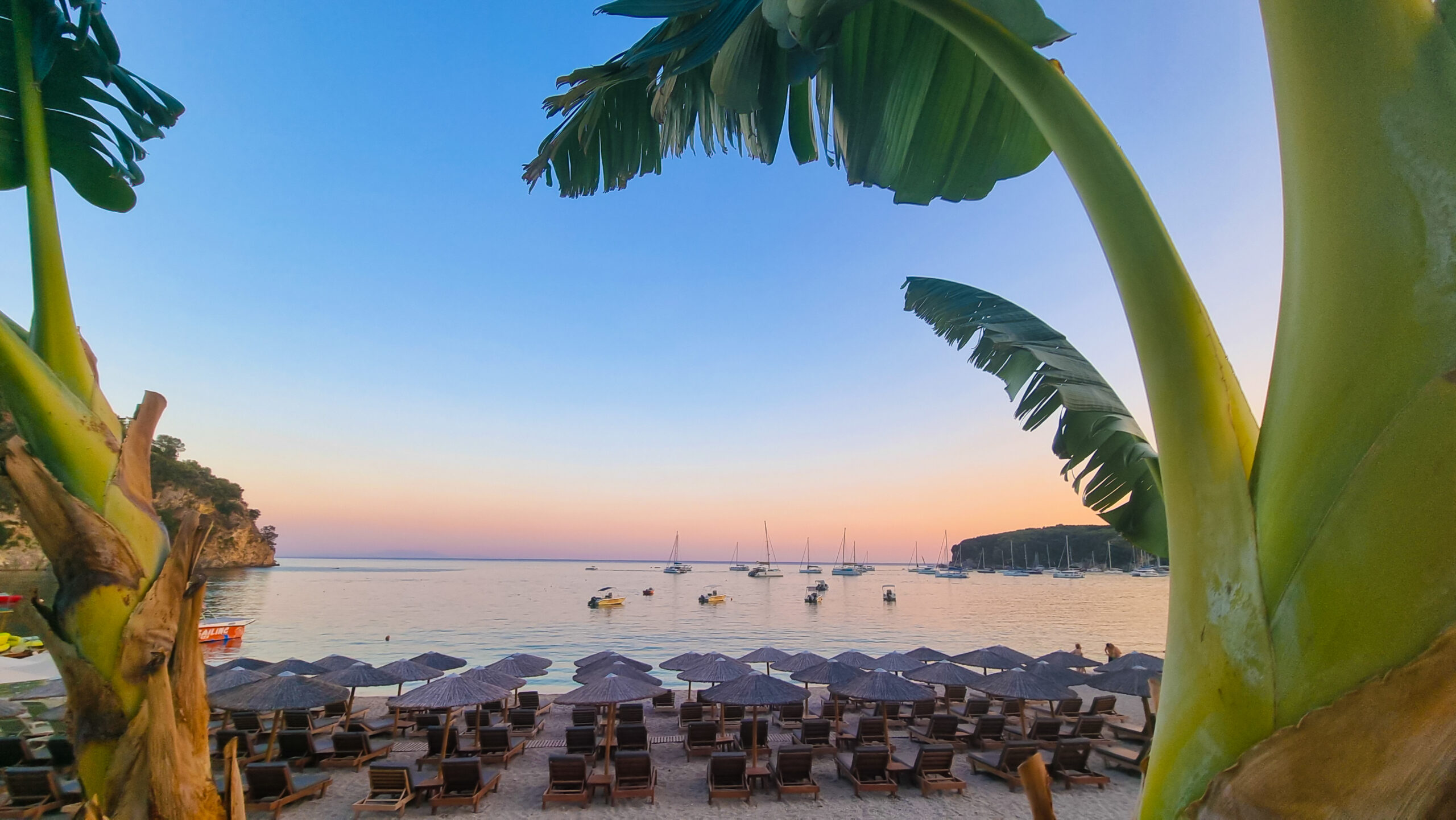
- Larger beaches with a mix of sand and shingle
- Gently shelving entry into the sea
- Easy, natural swimming
- Multiple beaches within walking distance
Explore best beaches in Parga →
Kalkan:
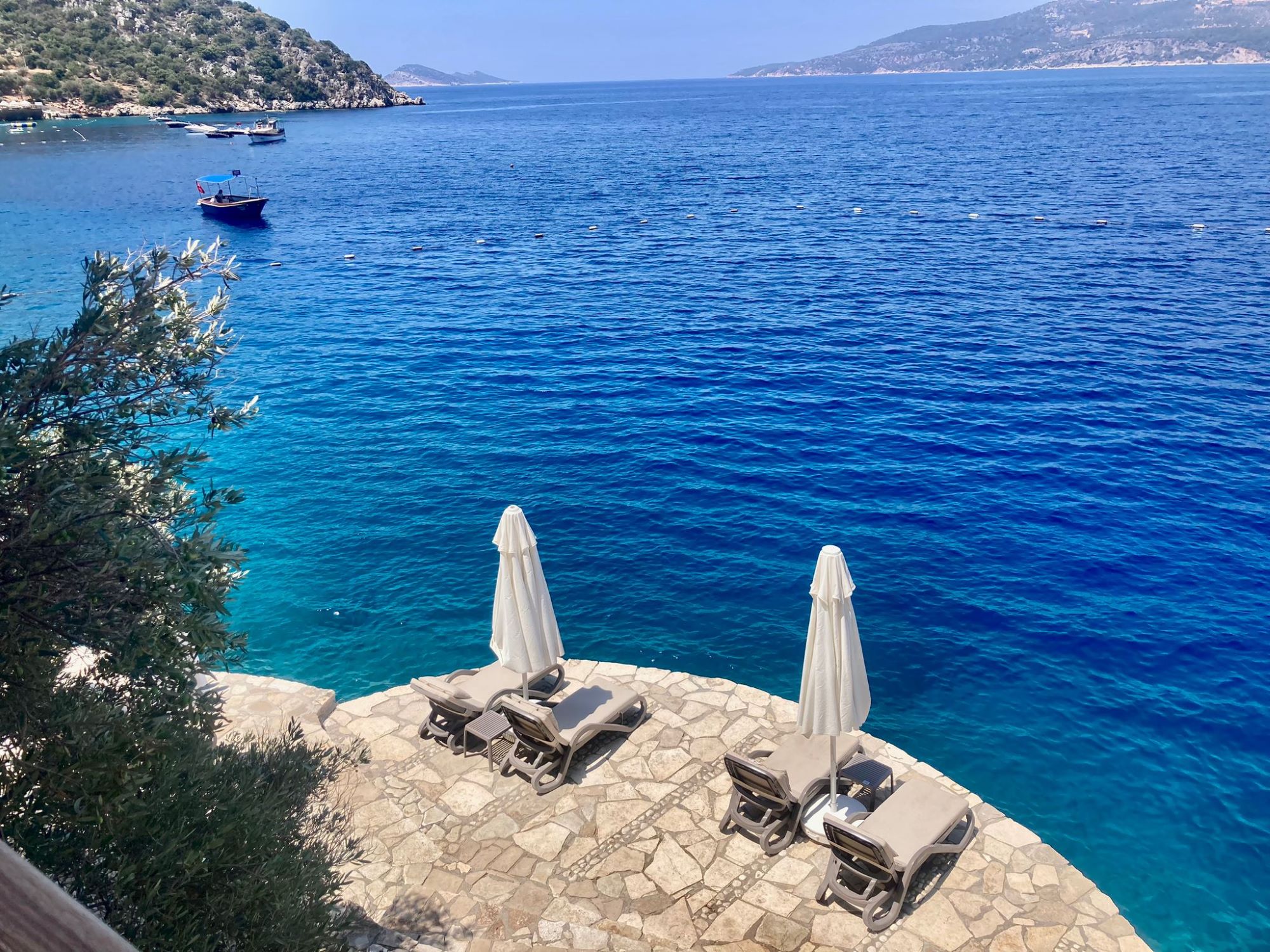
- Primarily beach clubs built into the rocks
- Access via platforms and ladders
- A more structured beach experience
- Sandy beaches (Patara, Kaputas) require travel
In simple terms:
- Parga = traditional beach experience
- Kalkan = beach club / platform experience (more Amalfi in style)
For families, particularly those with younger children, Parga tends to be the more practical choice.
Atmosphere
Balanced and varied vs more defined and stylised
Both destinations offer excellent dining and a strong evening atmosphere — but in slightly different ways.
Parga:
- A broader mix of traditional tavernas and more refined restaurants
- A balance between relaxed and more elegant dining
- A cosmopolitan feel, with a mix of European visitors
- An atmosphere that feels sociable without being dominated by one style
Kalkan:
- Known for its rooftop restaurants and beach clubs
- A more established “dining scene” with a slightly more dressed-up feel
- A strong British clientele
- A destination that leans more into its reputation as a place to be seen
Neither is better — but the balance differs.
Ease of getting around
Walkability vs reliance on taxis
This is a key practical difference.
Parga:
- Compact and fully walkable
- Beaches, town and restaurants all within easy reach
- No need for taxis or transfers
Kalkan:
- Also hilly, but more spread out
- Taxis are commonly used
- Beach clubs and villas often require transfers
If ease and convenience are a priority, Parga has the edge.
Ease of getting around
Walkability vs reliance on taxis
This is a key practical difference.
Parga:
- Compact and fully walkable
- Beaches, town and restaurants all within easy reach
- No need for taxis or transfers
Kalkan:
- Also hilly, but more spread out
- Taxis are commonly used
- Beach clubs and villas often require transfers
If ease and convenience are a priority, Parga has the edge.
Style of stay
Boutique in both — but with different emphasis
Both Parga and Kalkan are defined by boutique accommodation, but the balance and style differ.
Parga:
- Small boutique hotels (often under 20 rooms, some as few as 8)
- Predominantly family-run and independently owned
- A more intimate, hotel-led experience
Kalkan:
- A strong villa market, particularly for private stays
- A mix of intimate boutique hotels many featuring rooms with private pools
- More contemporary, design-led styling in many properties
Both destinations offer high-quality boutique hotels, but the overall feel of the stay can differ depending on how you choose to experience it.
- Parga tends to centre more naturally around hotel stays
- Kalkan offers greater flexibility between villas and boutique hotel living
In both, the choice ultimately comes down to how you prefer to structure your time — whether that’s a more sociable hotel environment or a more private, self-contained stay.
Evenings
Two strong dining scenes — different in style and structure
Evenings are a central part of the experience in both Parga and Kalkan — but they play out slightly differently.
Parga:
- Evenings centre around the Venetian harbour front
- Restaurants are concentrated along the waterfront and into the old town
- A mix of traditional Greek tavernas and more refined, elegant molecular style dining
- A natural, unstructured flow — you can walk, choose, and settle in easily
Kalkan:
- A much larger and more established restaurant scene overall
- High concentration of restaurants within the old town, similar to Parga
- A strong presence of rooftop dining, alongside harbour-front restaurants
- A broader mix of cuisine — Turkish, Mediterranean and international
- More traditional, simpler Turkish restaurants tend to sit in the new town
In simple terms:
- Parga offers a more quintessential Greek dining experience, with a clear harbour focus
- Kalkan offers greater scale and variety, with a more established and diverse restaurant scene
Both work exceptionally well — the difference is not quality, but style, variety and setting.
Families
Practical differences that shape the experience
Both Parga and Kalkan can work well for families, but they suit slightly different needs.
Parga:
- Gently shelving beaches, which work particularly well for families with younger children, those less confident in the water, or anyone who prefers a traditional beach experience
- Multiple beaches within walking distance
- Easy to navigate on foot, with no reliance on taxis for beaches or dining
- A compact, manageable layout that keeps everything close at hand
Kalkan:
- A strong mix of villas and boutique hotels, many with private pools
- Beach access is typically via platforms or beach clubs rather than walk-in shores
- Well suited to families confident around the water or happy spending time at beach clubs
- Taxis are a normal part of getting around, particularly between accommodation, town and beach
In practical terms:
- Parga tends to suit families looking for walkable beaches, simplicity and ease of movement
- Kalkan suits families who value space, privacy and independence, and are comfortable using taxis and navigating the destination more freely
Kalkan also has a long-established, upmarket British following, which shapes the overall feel and makes it a familiar environment for many families.
Neither is better — it simply depends on how you prefer to travel as a family.
When to go
Similar seasons, slight regional advantage
Both destinations follow a similar Mediterranean season, so timing works in much the same way:
- May–June → quieter, comfortable temperatures, ideal for exploring and dining outdoors
- July–August → peak summer, hotter and busier
- September → warm sea, more space, and an easier overall pace
See the best time to visit Parga →
Kalkan, being further south, has a slight edge at the beginning and end of the season, with more reliable heat in early May and late October.
A helpful way to decide
Choose Parga if you prefer:
- A destination where everything is within walking distance
- Traditional beaches with easy access into the sea
- A balanced mix of Greek tavernas and more refined dining
- A more cosmopolitan European feel
Choose Kalkan if you prefer:
- A larger, more established restaurant scene
- Rooftop dining and beach club culture
- A mix of boutique hotels and private villa stays
- A destination with a long-standing well-heeled British following
A final note
This isn’t a question of one being better than the other.
They offer two very similar types of holiday, which is why so many guests return to both.
“If you like Kalkan, there’s every chance you’ll like Parga — and vice versa. They deliver the same fundamentals: boutique hotels, strong restaurants and a destination you can settle into easily. It often comes down to whether you feel like somewhere familiar, or somewhere new.”
— Holly Matthews, Head of Product
Frequently asked questions
Is Parga similar to Kalkan?
Yes — both offer boutique accommodation, strong dining scenes and harbour-based living, but with different cultural influences and visual character.
Which has better beaches, Parga or Kalkan?
Parga, for traditional beaches with walk-in access. Kalkan focuses more on beach clubs and platforms.
Is Parga better value than Kalkan?
Parga can offer slightly better value for boutique hotel stays, although both destinations operate within a similar overall price range.
Which is better for couples?
Both work well. The choice comes down to whether you prefer Parga’s balance and ease, or Kalkan’s more established dining scene and setting.