Cappadocia Explained: The History, Geology & Stories Behind the Landscape
From fairy chimneys and underground cities to Byzantine monasteries and cave hotels, discover the remarkable forces of nature and centuries of history that shaped one of the world’s most extraordinary landscapes.
There Is Really No Place Quite Like Cappadocia
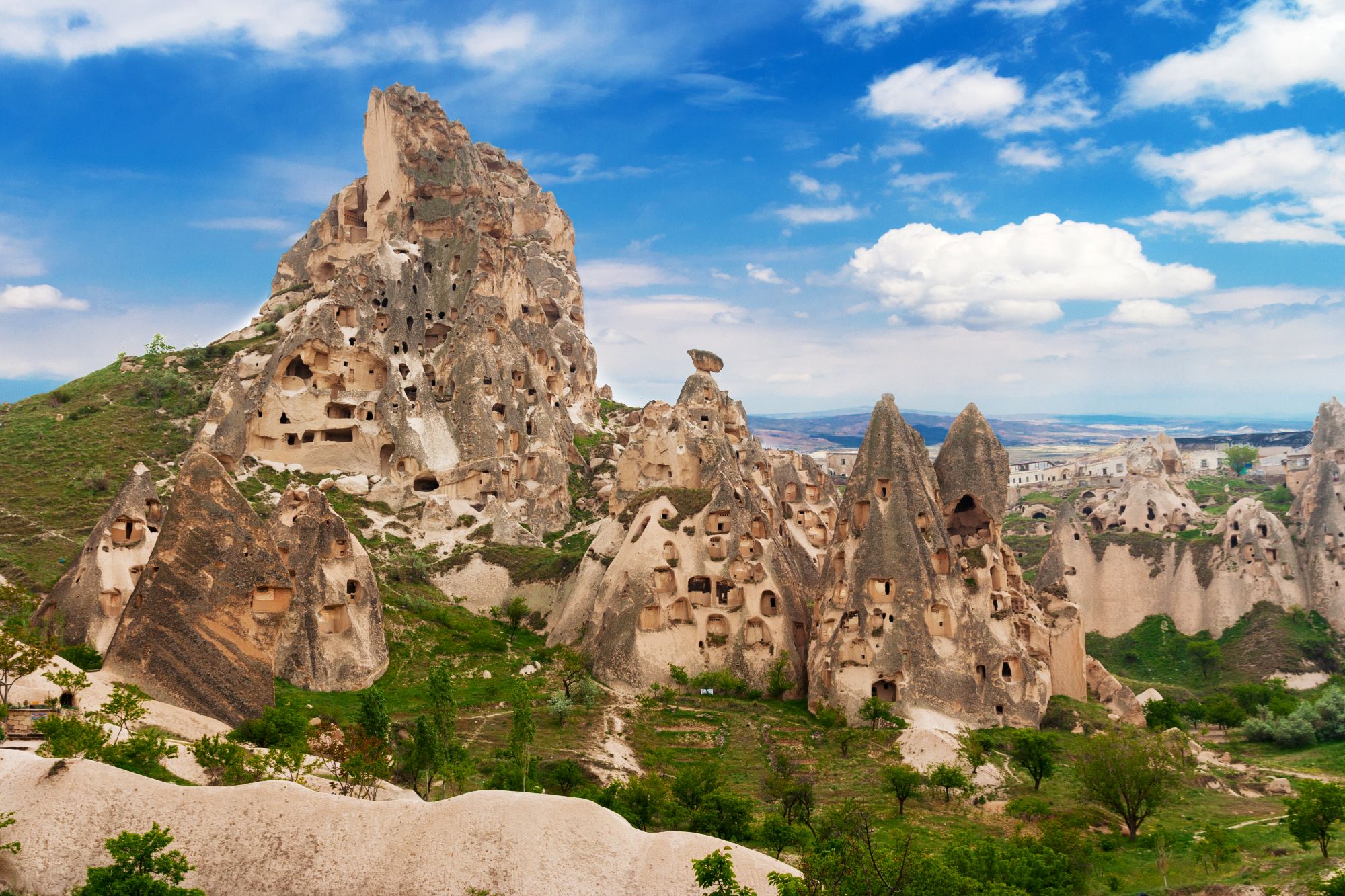
The National Park of Cappadocia occupies the heart of Turkey, between the Black Sea to the north and the Taurus Mountains to the south. Spanning more than 24,000 square kilometres of Central Anatolia, it is a region of extraordinary contrasts: towering fairy chimneys, subterranean cities, rock-cut churches, deep valleys and entire communities carved into the landscape itself.
Yet even geography fails to explain Cappadocia properly.
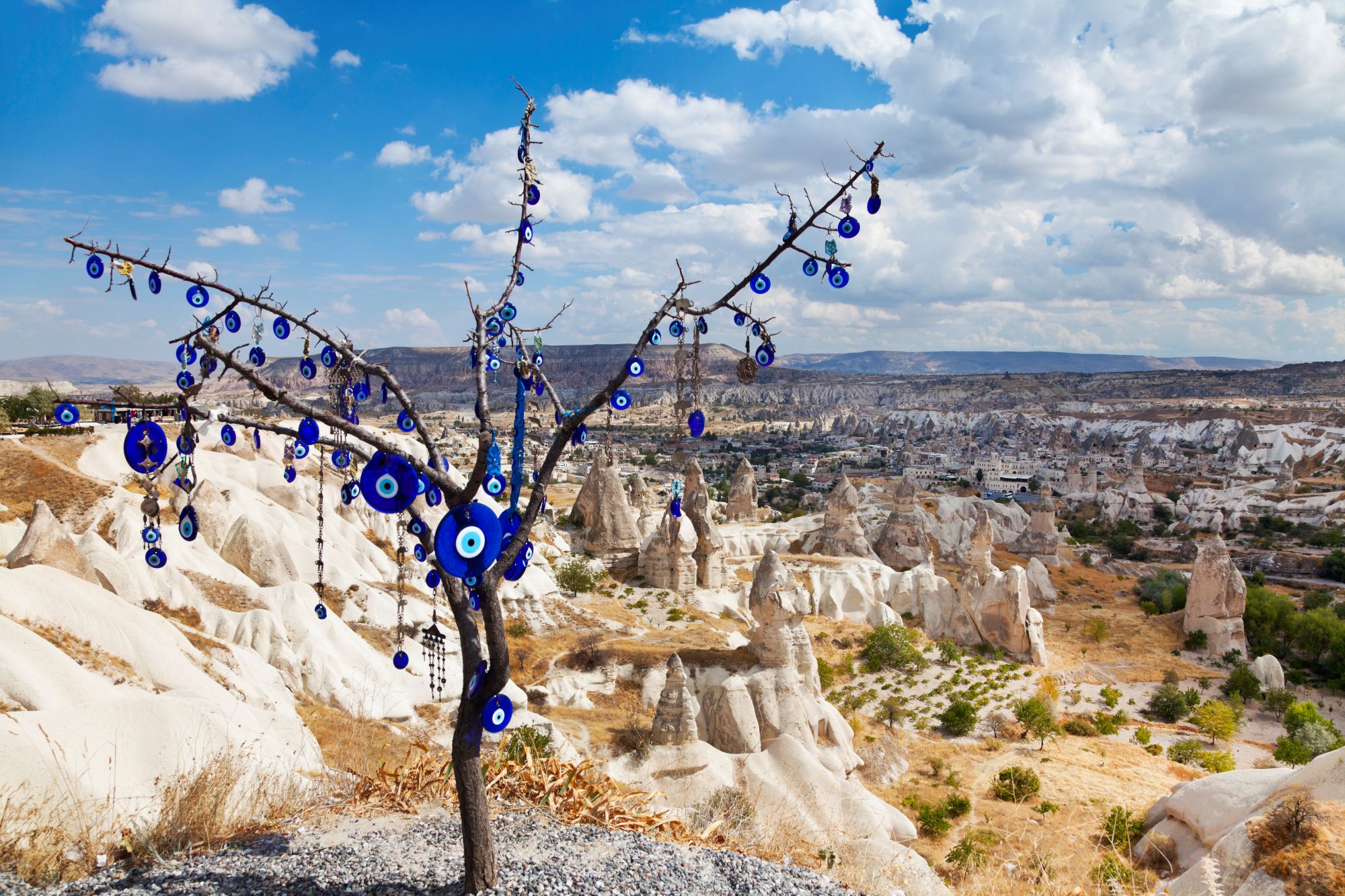
There is really no adequate way of conveying the surreal nature of this landscape. Photographs struggle to do it justice and, for centuries, travellers have found themselves searching for words capable of describing what they encountered.
In 1837, the English geologist W. J. Hamilton simply wrote:
“Words fail one in attempting to describe the appearance of this extraordinary locale.”
Nearly two centuries later, little has changed.
The scale of the landscape, the enormity of the skies and the sheer improbability of the rock formations make Cappadocia feel less like a destination and more like another world altogether. The famous Valley of Fairy Chimneys, situated between the towns of Avanos, Urgup and Nevsehir, remains one of the most astonishing landscapes on the planet.
The unusual light is one of the reasons so many artists have made the region their home. Along with painters, generations of literary travellers before and since Hamilton have struggled to capture the essence of this remarkable place.
French traveller Paul Lucas, writing in the early eighteenth century, described “countless pyramidal formations” containing staircases, windows and entire dwellings carved directly into the rock. Many of those extraordinary structures survive today.
Perhaps the most remarkable thing of all is that people have not simply lived alongside this landscape. For thousands of years, they have lived within it.
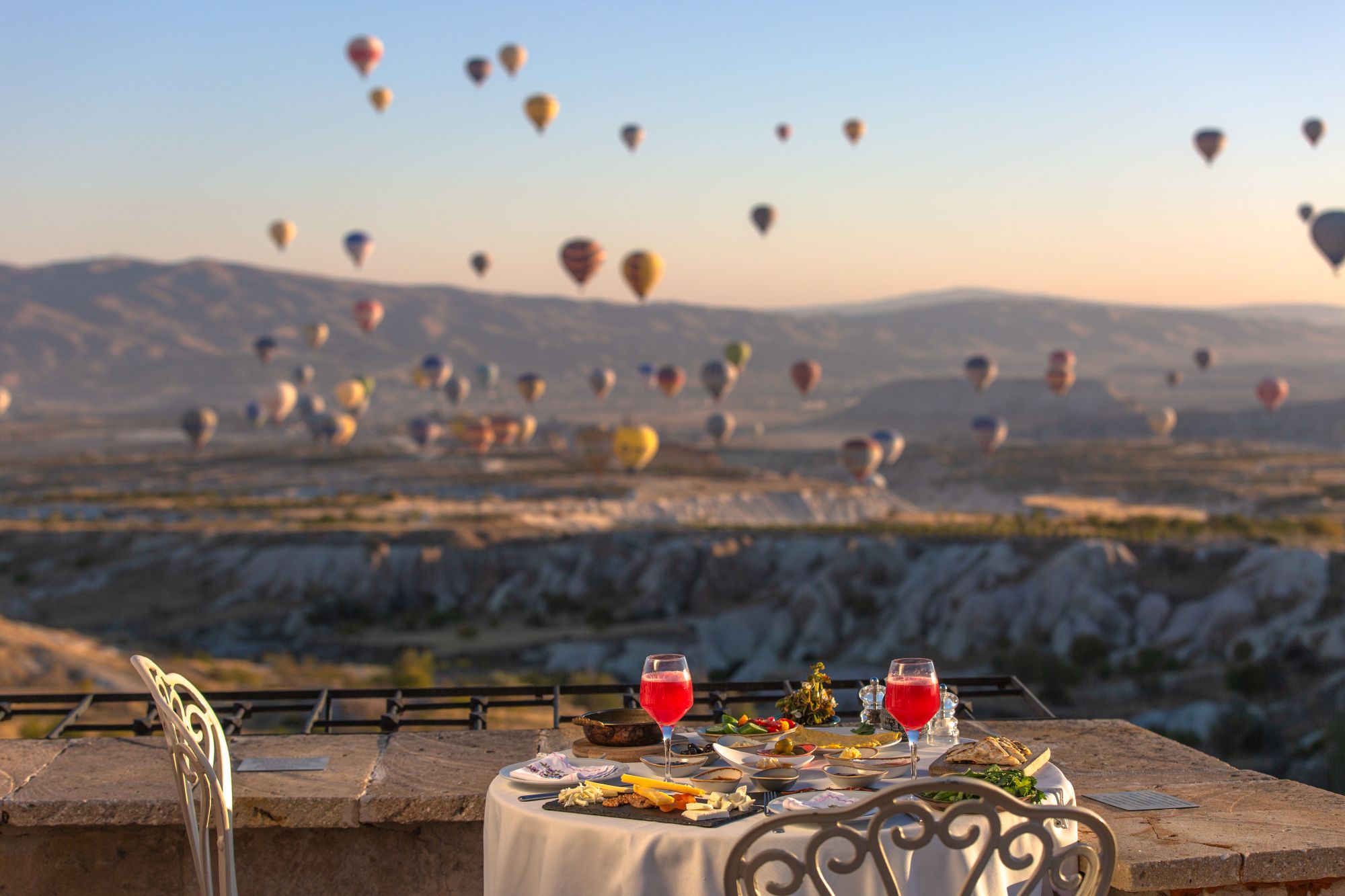
Today, visitors come to experience everything from sunrise balloon flights and underground cities to cave hotels and spectacular valley walks. Our guide to the best things to do in Cappadocia explores the experiences that make the region so unforgettable.
The Story Begins Millions of Years Ago
To understand Cappadocia, you first need to understand the landscape itself.
Around thirty million years ago, powerful volcanic eruptions from Mount Erciyes, Mount Hasan and Mount Gollu blanketed much of Central Anatolia beneath a thick layer of ash. Over time, this ash solidified into a soft volcanic rock known as tufa, which would become the defining material of the region.
Nature then spent millions of years refining its masterpiece.
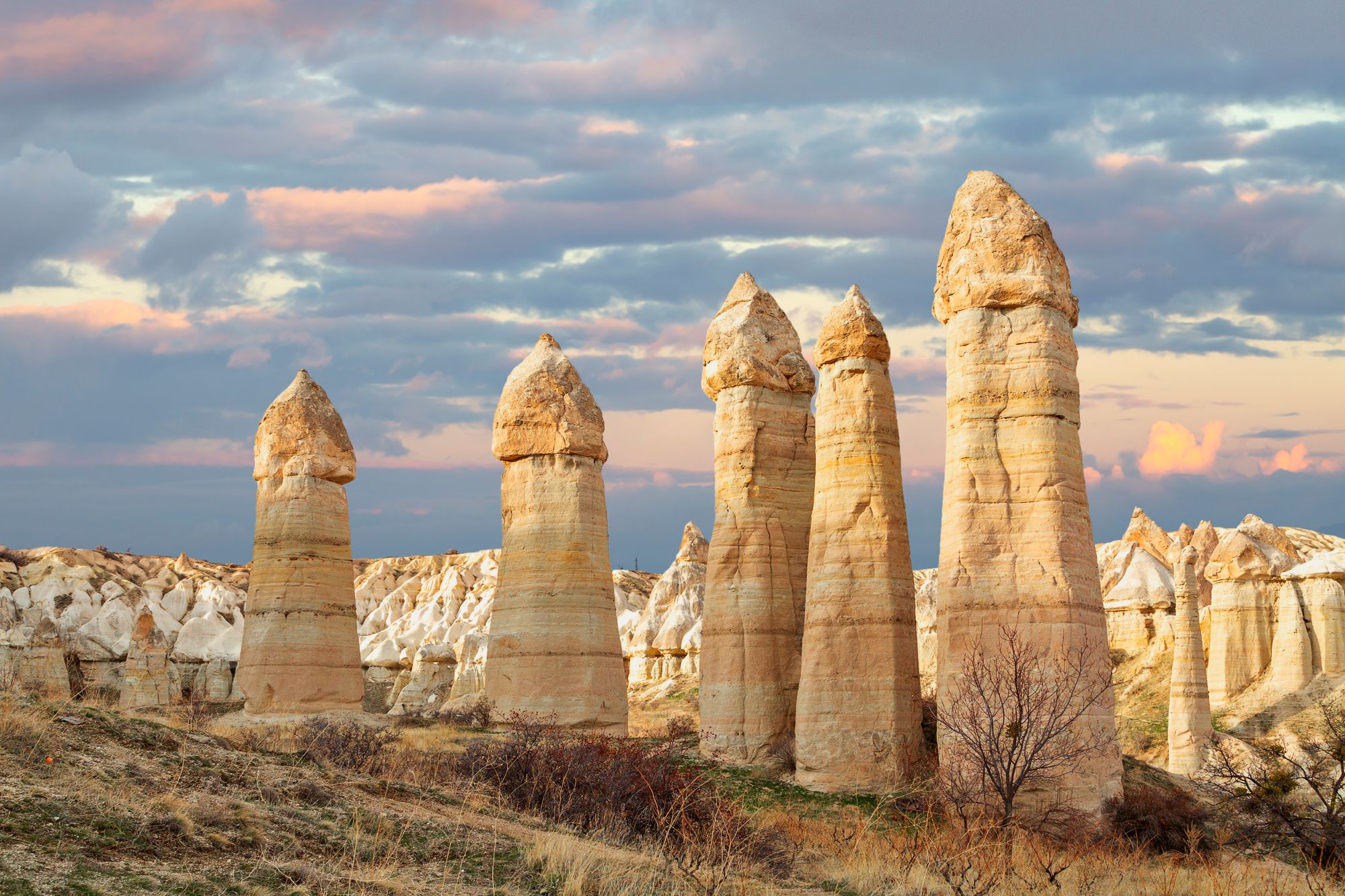
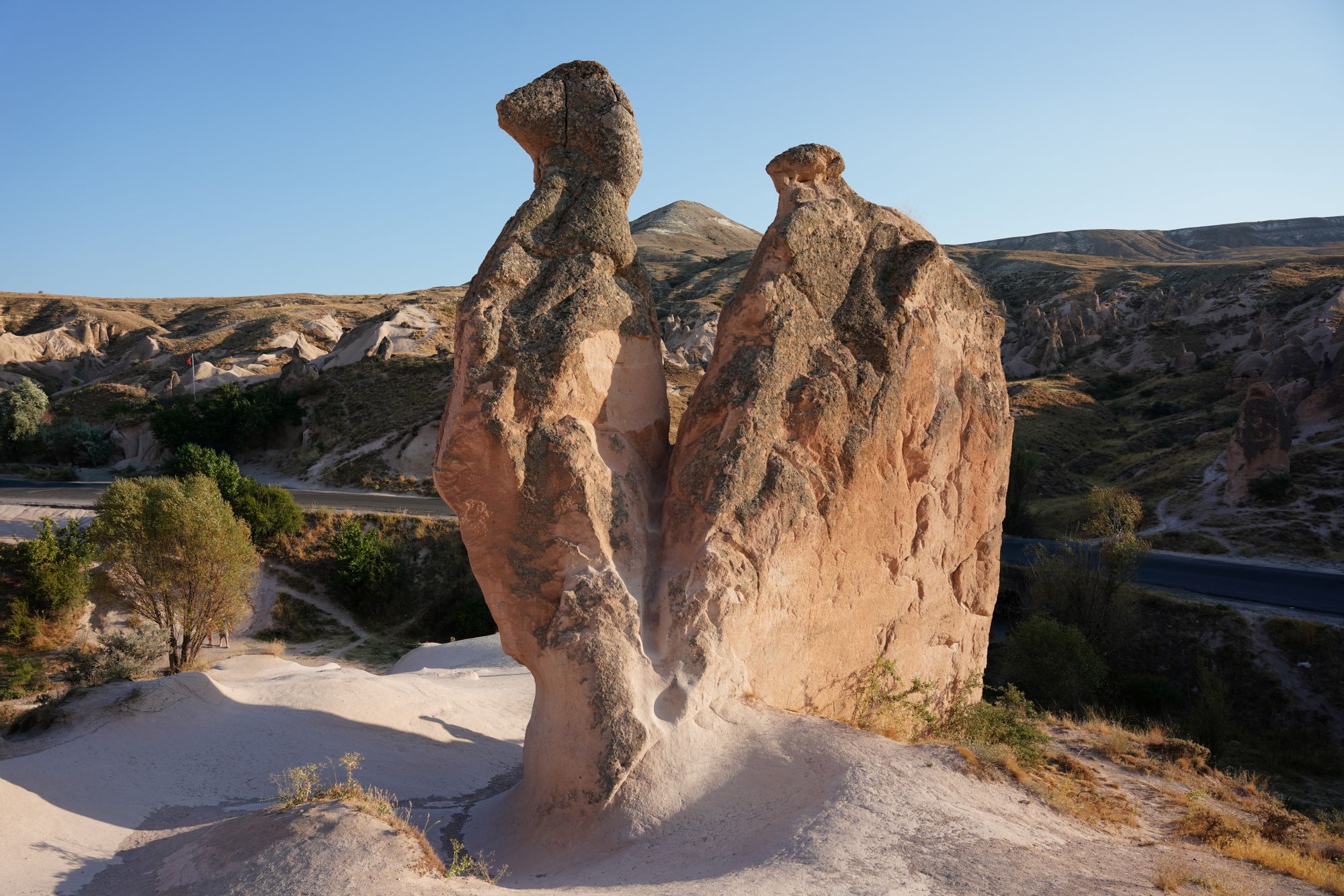
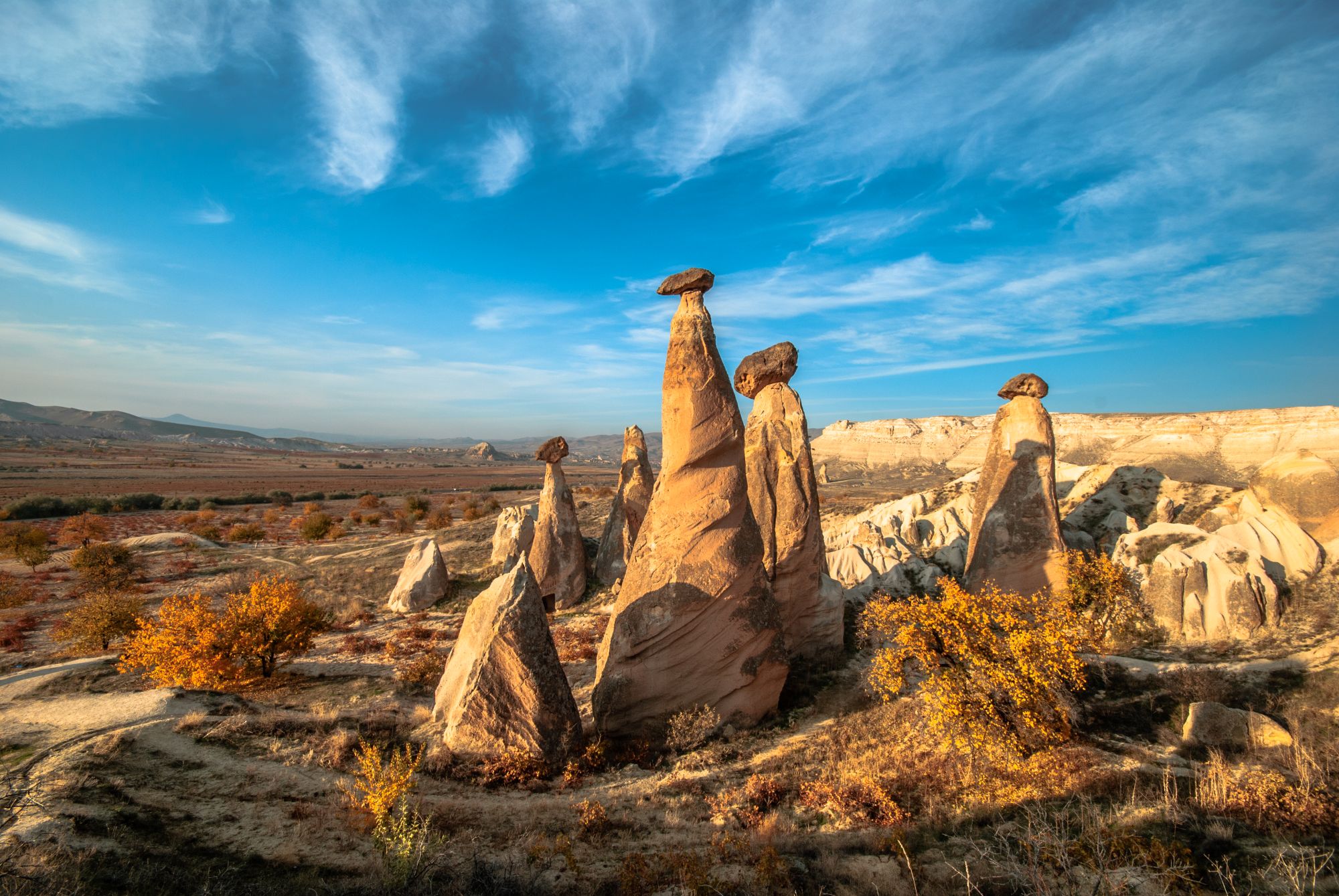
Wind, rain, floods and dramatic fluctuations in temperature gradually eroded the softer rock, carving deep valleys, ravines and canyons throughout the landscape. In some areas, harder caps of volcanic stone protected the softer material beneath. As the surrounding tufa wore away, hundreds of towering pillars, cones and pinnacles were left standing.
These are the formations known today as fairy chimneys.
Locally referred to as Peri Bacasi, they vary enormously in shape and size. Some rise more than forty metres above the valley floor, while their colours shift throughout the day from pale creams and pinks to ochre, gold and russet brown. Together they create one of the most distinctive geological landscapes anywhere in the world.
Yet geology alone does not explain Cappadocia’s fascination. What makes the region truly extraordinary is how people adapted to this unusual environment and transformed it into a place to live, worship and survive.
A Landscape Carved by Human Hands
The same soft tufa rock that allowed nature to sculpt valleys and fairy chimneys also provided an ideal material for human settlement.
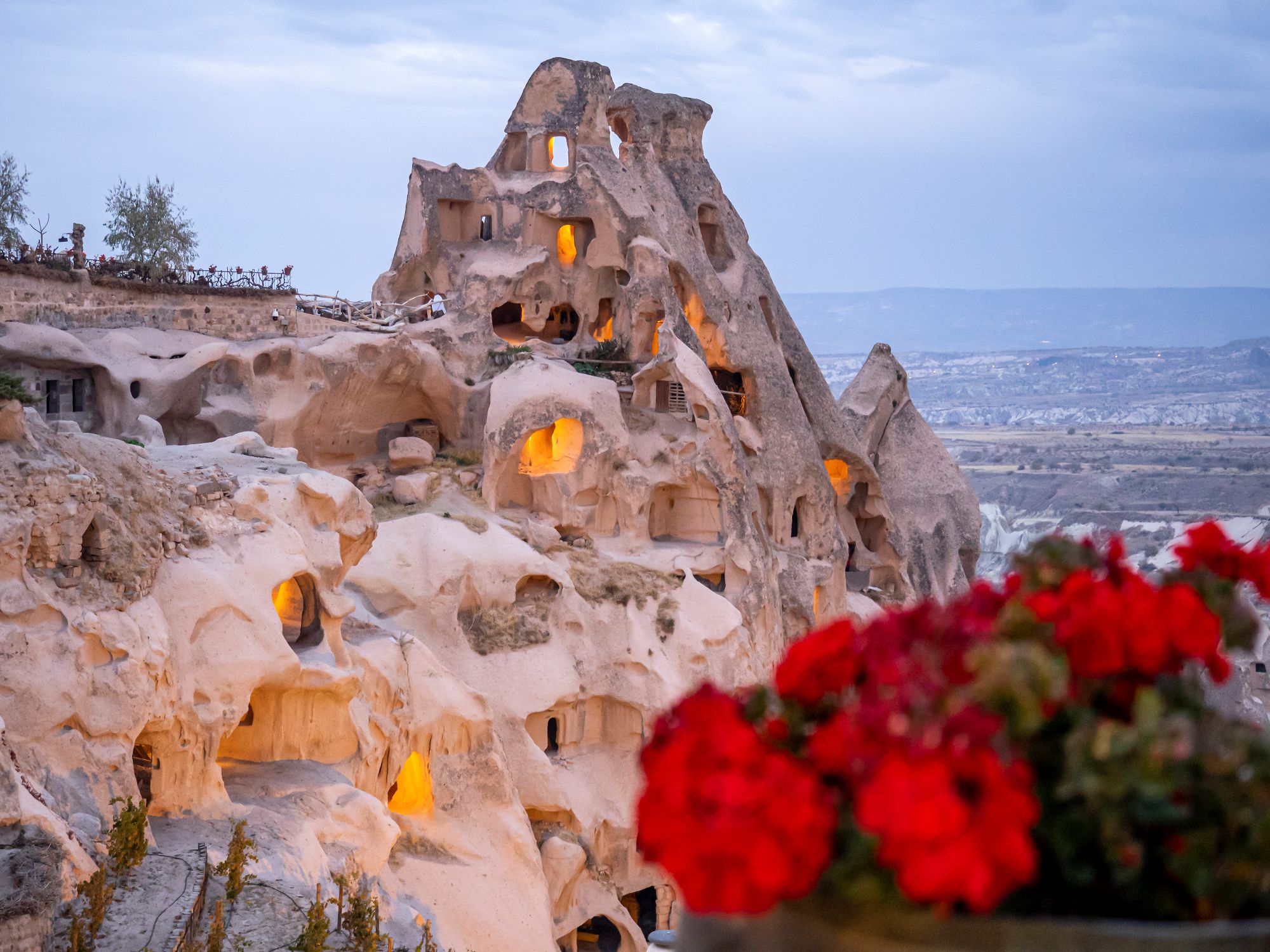
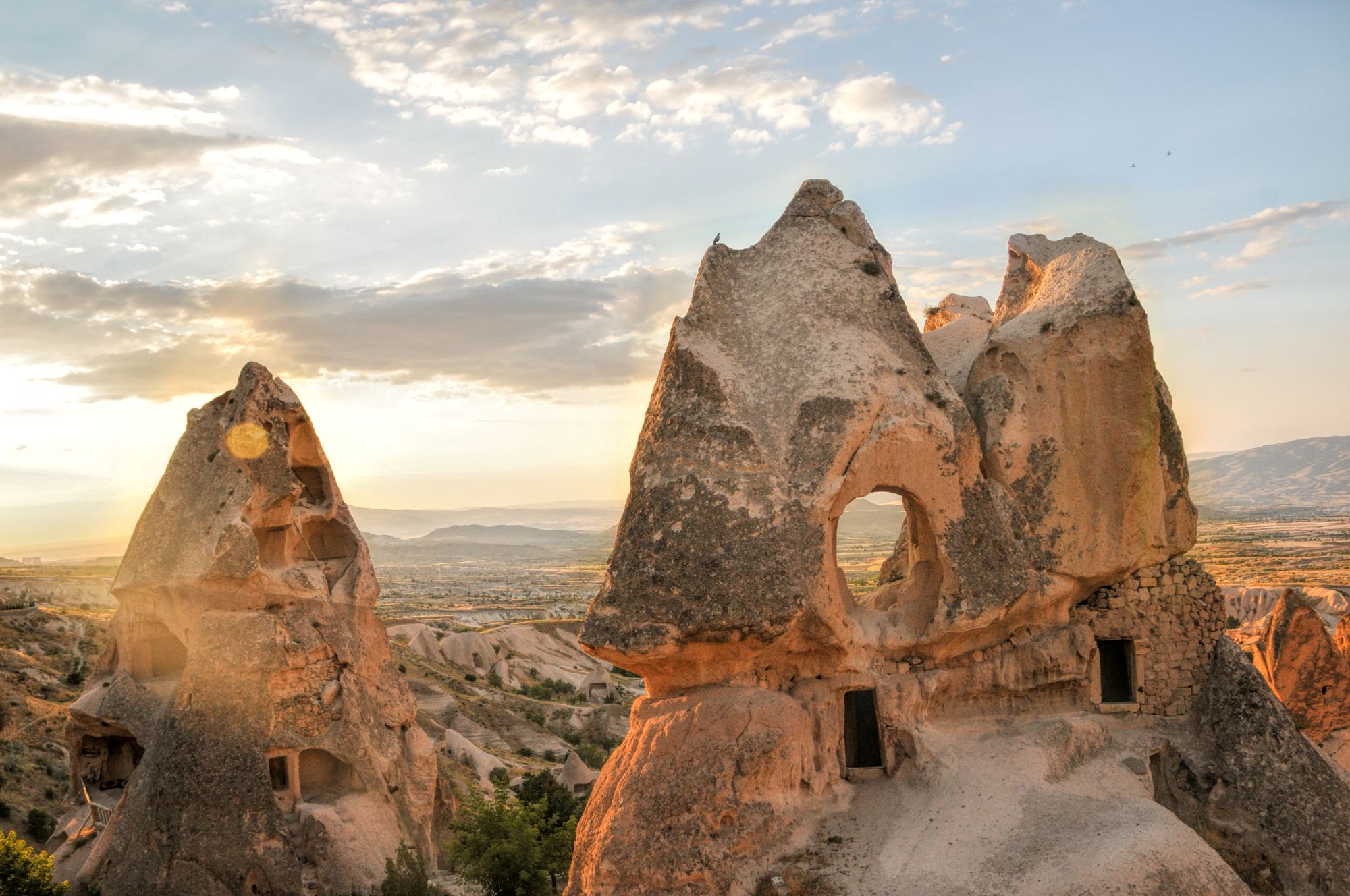
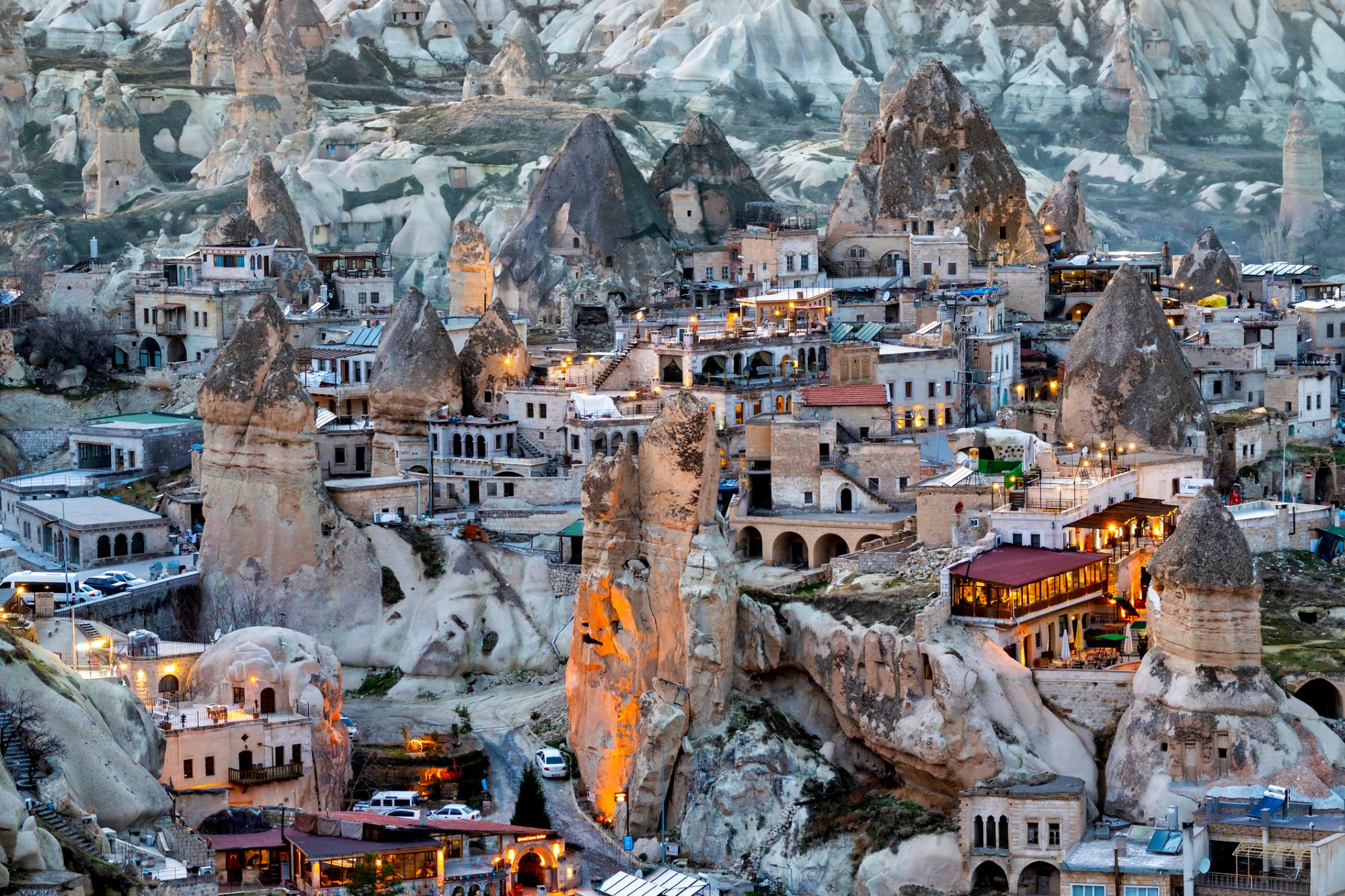
Over centuries, people carved homes, churches, monasteries, stables, storage chambers and entire villages directly into the landscape. Many of the structures blend so seamlessly into their surroundings that they remain almost invisible until you are standing beside them.
The fertile soil and central location attracted settlers from the earliest periods of human history. Ancient Anatolian tribes, Assyrians, Hittites, Persians, Greeks, Romans, Armenians, Arabs, Slavs and Turkic peoples all passed through Cappadocia, each leaving traces of their culture behind.
Among the most distinctive features of the region are the thousands of dovecotes carved into cliff faces during the eighteenth and nineteenth centuries. These small chambers housed pigeons whose droppings were collected to fertilise the vineyards that have flourished here for centuries. Many were decorated by local craftsmen with inscriptions and colourful motifs, transforming practical agricultural structures into unexpected works of art.
The region also played an important role along the Silk Road. Seljuk Turks built caravanserais to shelter merchants and their camel trains crossing Anatolia, whilst later Ottoman rulers added mosques, bridges and religious schools that further enriched the cultural landscape.
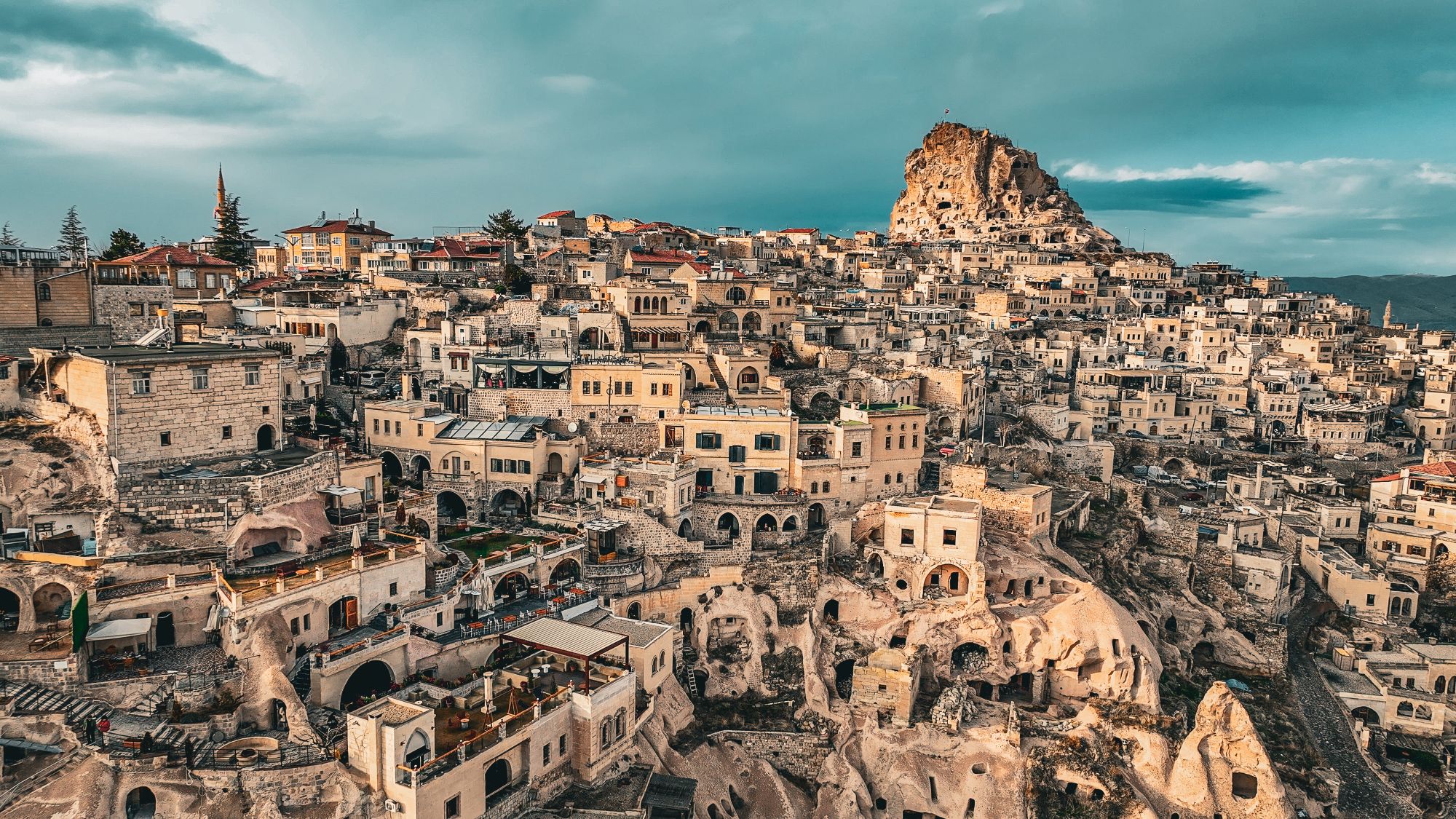
Today, cave dwellings, monasteries and houses of volcanic stone remain an integral part of daily life. Many continue to be inhabited, whilst others have found a new purpose as the cave hotels for which Cappadocia is now famous.
Cappadocia and the Rise of Early Christianity
Whilst geology shaped the landscape, Christianity helped shape Cappadocia’s identity.
The region became an important centre of early Christianity after St Paul travelled through Anatolia during the first century AD. Its remote valleys and harsh terrain appealed to early Christian communities seeking lives of devotion, simplicity and prayer.
Over time, these isolated groups developed into organised religious communities. A pivotal figure was St Basil the Great, Bishop of Caesarea, who arrived during the fourth century. His teachings helped establish the foundations of monastic life that continue to influence the Greek Orthodox Church today.
Under his guidance, churches began appearing throughout the valleys around modern-day Goreme. Small communities evolved into larger monastic settlements, creating one of the most important centres of Christian worship in the Byzantine world.
Although none of the original churches from St Basil’s time survive, hundreds of rock-cut churches, chapels and monasteries remain. Many are decorated with extraordinary frescoes depicting scenes from the Bible, the life of Christ and the stories of the saints.
Today, the Goreme Open-Air Museum contains one of the finest collections of Byzantine religious art anywhere in the world and forms a key part of Cappadocia’s UNESCO World Heritage designation.
The Underground Cities Beneath Cappadocia
If the landscape above ground appears remarkable, what lies beneath is arguably even more astonishing.
For centuries, communities carved elaborate underground settlements into the soft volcanic rock, creating entire cities hidden beneath the surface. These subterranean worlds provided refuge during times of conflict and invasion, allowing thousands of people to shelter safely underground.
The best-known examples are Derinkuyu and Kaymakli.
Some sections extend as many as seventeen storeys below ground and contain living quarters, kitchens, churches, ventilation shafts, storage areas and communal gathering spaces. Narrow tunnels connect different chambers, whilst cleverly designed entrances could be sealed from within when danger threatened.
Many of these settlements remained hidden for centuries, their entrances almost impossible to detect from the surface. Even today, archaeologists continue to discover new chambers and passages, and it is widely believed that many more remain undiscovered.
Together, they offer a fascinating glimpse into the ingenuity, resilience and adaptability of the people who called Cappadocia home.
From Cave Dwellings to Cave Hotels
One of Cappadocia’s most unusual qualities is that its history remains a living part of the modern landscape.
The volcanic stone that once sheltered monks, merchants and farming families provides natural insulation, remaining cool during hot summers and warm throughout the harsh Anatolian winters. It is one of the reasons these dwellings remained inhabited for so long.
Today, many of these historic cave houses have been carefully restored and transformed into boutique hotels.
Choosing the right base can significantly shape your experience of the region, whether you are drawn to the panoramic views of Uchisar or the authentic atmosphere of Urgup. Our guide to where to stay in Cappadocia compares the region’s most desirable locations and luxury cave hotels.
Properties such as Museum Hotel, Argos in Cappadocia, Ariana Sustainable Luxury Lodge, Taskonaklar and others allow guests to experience this remarkable heritage first-hand. Far from feeling like museums, these hotels combine centuries-old architecture with contemporary comfort, creating a style of accommodation found nowhere else in the world.
Few destinations offer the opportunity to sleep within a landscape that has been continuously inhabited for thousands of years.
Flora, Fauna and the Light That Inspired Artists
Beyond its geology and history, Cappadocia is home to a surprisingly rich natural environment.
Valley floors are lined with vineyards, orchards, pistachio trees and poplars, whilst wildflowers emerge in abundance during spring. The region supports a variety of birdlife and remains particularly rewarding for ornithologists, with birds of prey often seen circling above the valleys.
The quality of light has long attracted artists and photographers. Throughout the day, the landscape changes colour as the sun moves across the valleys, illuminating the fairy chimneys in shades of pink, gold and amber.
It is a subtle beauty, but one that leaves a lasting impression.
Why Cappadocia Still Feels So Extraordinary
Many destinations impress. Few leave visitors genuinely wondering how such a place can exist.
Cappadocia is one of them.
A landscape shaped by volcanoes. Underground cities hidden beneath the earth. Monasteries carved into cliffs. Homes sculpted from stone. A place where geology, history and human ingenuity have become inseparable.
Nearly two centuries after W. J. Hamilton admitted that words failed him, travellers continue to arrive in Cappadocia and find themselves facing the same challenge.
The more you learn about Cappadocia, the more extraordinary it becomes.
First-time visitors often begin with our guides to where to stay in Cappadocia and the best things to do in Cappadocia, both designed to help you make the most of your time in this remarkable region.